
Choosing the right pharmaceutical waste disposal services for pharmacies is essential. The right services will help you focus on compliance, safety, and cost control. Federal and state regulations strictly control pharmaceutical waste handling and disposal. Even small compliance missteps can trigger audits or regulatory fines.
This guide explains how pharmaceutical waste disposal services support compliance. It compares service models and outlines pricing considerations. You’ll learn how reliable pharmacy waste management solutions help simplify daily operations. How they help meet EPA, DEA, and USP <800> compliance requirements.
How Do Pharmaceutical Waste Disposal Services Support Pharmacy Compliance?
Pharmaceutical Waste Disposal Regulations for Pharmacies
Pharmacies operate under multiple regulatory authorities. Pharmaceutical waste disposal services help pharmacies comply with federal regulations, such as:
- The U.S. Environmental Protection Agency (EPA). It oversees RCRA 40 CFR Part 266, Subpart P, which governs hazardous materials.
- The Drug Enforcement Administration (DEA). The DEA regulates controlled substances, as well as their transport and disposal. It oversees compliant drug disposal under strict non-retrievable destruction requirements.
- The Occupational Safety and Health Administration (OSHA). It oversees workplace and staff safety.
- The Department of Transportation (DOT). The DOT oversees the transport of pharmaceutical waste for treatment and final disposal.
- United States Pharmacopeia (or USP), which oversees the USP <800> Hazardous Drugs standards.
When you work with compliant providers, you ensure that they properly classify and handle your waste. This approach ensures compliance and helps your pharmacy meet regulatory requirements.
The Best Practices for Pharmaceutical Waste Management in Pharmacies
Best practices for pharmaceutical waste management in pharmacies involve several steps. Proper waste stream segregation, accurate labelling, secure storage, and regular staff training all play a critical role. Working with a licensed provider reduces compliance risk and helps pharmacies stay audit-ready.
Are Pharmaceutical Waste Disposal Services Near Me Required to Meet Federal Standards?
Yes, pharmaceutical waste disposal services near you must meet federal standards. Providers must comply with the EPA, DEA, OSHA, and DOT. State and local licensing may add additional compliance obligations.
Pharmacies should verify permits, certifications, and insurance coverage before selecting a provider. Following pharmaceutical waste management best practices ensures ongoing compliance and risk reduction.
What Should Pharma Retail Facilities Evaluate in Pharmaceutical Waste Disposal Services?
How to Choose Pharmaceutical Waste Management Solutions for Pharmacies
Selecting the right pharmacy waste management solutions starts with evaluating provider credentials. You must evaluate licensing, insurance coverage, industry experience, and service capabilities.
Reliable providers must manage a wide variety of waste types within one program. Compliant pharmaceutical waste disposal companies in the U.S. must be able to operate on both regional and nationwide levels.
Trusted pharmaceutical waste disposal services providers will help you navigate changing regulations. Operating a pharmaceutical system across multiple states? They will help you maintain consistent compliance across multiple locations. A reliable provider will help ensure your pharmacy is audit ready and compliant.
Pharmacy Pharmaceutical Waste Disposal Contract Services
When selecting a pharmaceutical waste disposal service, it’s important to consider several key factors in your contract. Select a pharmaceutical waste disposal contract services that offers flexibility. Providers must support flexible pickup schedules and scalable service levels. Transparent pricing is essential for accurate budget planning and avoiding unexpected costs.
Avoid long-term contracts that lock your pharmacy into services you do not need. These service agreements often lead to increased pharmacy waste management costs. Flexible pharmacy waste management solutions support better cost control and long-term compliance.
How Do Pharmacy Waste Management Solutions Handle Different Drug Types?
Pharmacy Waste Management Solutions
Pharmacy waste management solutions distinguish between hazardous and non-hazardous pharmaceuticals. This ensures pharmacies use proper waste disposal pathways for disposing of their waste.
Hazardous drugs require strict handling and approved treatment methods. Non-hazardous pharmaceuticals also require secure disposal to reduce diversion risks. Controlled substances must follow DEA non-retrievable destruction, with witnessed processes and complete documentation.
Pharmaceutical Waste Disposal Regulations
Proper handling prevents diversion, environmental contamination, and costly fines. Pharmaceutical waste disposal services manage each waste stream in accordance with regulatory requirements. This protects your staff, patients, and the surrounding community.
What Is the Difference Between On-Site and Off-Site Pharmaceutical Waste Disposal Services?
Best Practices for Pharmaceutical Waste Management
On-site pharmaceutical waste treatment requires specialized equipment, staff training, and regulatory oversight. For most pharmacies, these requirements are costly and impractical.
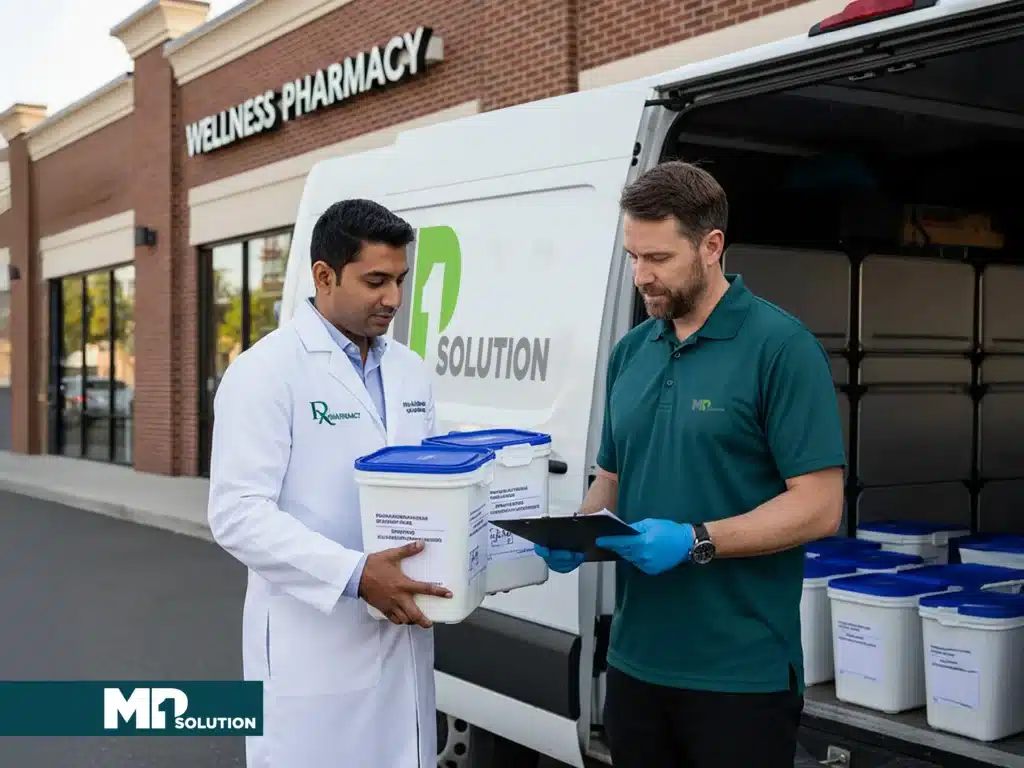
Off-site pharmaceutical waste disposal services transfer waste handling to licensed providers. These providers handle transportation, treatment, and final destruction at regulated facilities. This service model supports best practices for pharmaceutical waste management in pharmacies.
On-Site and Off-Site Pharmacy Waste Management Solutions Cost
Off-site pharmacy waste management solutions reduce operational burden and compliance risk. Vendor-managed programs are often more cost-efficient for small and mid-sized pharmacies. These programs ease the expense and operational burden of maintaining on-site treatment capabilities.
How Does Reverse Distribution Support Pharmaceutical Waste Disposal Services?
Reverse Distribution: One of the Best Pharmacy Waste Management Solutions
Reverse distribution helps pharmacies return eligible pharmaceuticals for manufacturer credit. It helps people dispose of controlled medications that they cannot reuse or resell properly. Reverse distribution supports compliant pharmaceutical waste disposal regulations for pharmacies. This process reduces waste volume and offsets pharmaceutical waste disposal costs.
Experts consider reverse distribution one of the best practices for pharmaceutical waste management in pharmacies. It helps pharmacies recover value while maintaining regulatory compliance.
Reverse Distribution and Pharmaceutical Waste Disposal Regulations for Retail Outlets and Medical Facilities
DEA-registered reverse distributors manage controlled substances under strict chain-of-custody requirements. This is important for retail pharmacies and dispensaries within healthcare facilities and long-term care facilities.
Consistent documentation and audit readiness are critical for their operations. Reliable providers will support you by providing consistent, compliant handling and reporting.
How Much Do Pharmaceutical Waste Disposal Services Cost for Pharmacies?
Pharmacy Waste Management Solutions Cost Models
The cost of pharmacy waste management solutions varies depending on the service model used. Common pricing structures include:
- Per-pound rates. Per-pound rates for pharmaceutical waste disposal are lower. Hazardous and chemotherapy waste, on the other hand, costs more.
- Per-pickup fees. For low-volume generators who prefer on-demand or infrequent pickups over fixed schedules.
- Flat-rate programs have a predictable monthly fee. This consistency helps with managing pharmaceutical waste, avoiding variable charges, and simplifying budgeting for ongoing compliance.
- Mail-back programs. These programs include prepaid shipping. Container sizes and types dictate the final costs. Cost-effective for small pharmacies with limited waste volumes.
Monthly costs depend on waste type, volume, pickup frequency, and regulatory requirements. Transparent pricing helps pharmacies budget accurately and avoid unexpected charges.
Why Pharmaceutical Waste Disposal Services Near Me Offer More Benefits
Pharmaceutical waste disposal services near you often offer more benefits. Proximity allows providers to reduce their transportation costs and improve service responsiveness. Location, pickup frequency, and service scope all affect pricing. Providers offering clear, all-in pricing help pharmacies maintain predictable costs.
What Documentation Should Clients Receive for Pharmaceutical Waste Disposal Services?
Pharmacies should receive complete documentation for every pickup. That includes detailed manifests and Certificates of Destruction (CODs). Controlled substances require additional documentation, like the DEA Form 41. Pharmaceutical waste disposal contract services should clearly outline documentation responsibilities and timelines.
Additionally, proper documentation supports audits, inspections, and internal reporting. Secure online portals and responsive support further strengthen pharmaceutical waste management programs.
Choose MP1 Solution for Compliant Pharmaceutical Waste Disposal Services
MP1 Solution provides compliant and cost-efficient pharmaceutical waste disposal services. Our predictable pricing, documentation, and hands-on support make it easy for retail and hospital pharmacies to navigate regulatory requirements and manage waste effectively.
Take the guesswork out of your pharmaceutical waste disposal. Experience hassle-free, compliant pharmaceutical waste disposal solutions with MP1 Solution.
Call MP1 Solution now for your no-obligation Quick Quote: 888-641-6131.
We look forward to helping your facility stay safe, compliant, and efficient.