
Small clinics and healthcare facilities in Naperville, Illinois, face a real challenge. Regulatory compliance is strict and complex, and pricing structures are often unclear. They need a medical waste pickup service that they can trust.
The right provider must deliver three essentials. They must help clinics maintain regulatory compliance, cost control, and operational reliability. This guide will help assess the medical waste removal Naperville clinics require for their needs.
The Medical Waste Disposal Service Naperville Clinics Need
A reliable medical waste disposal service that clinics depend on supports the entire medical waste management process from proper segregation at the point of generation to storage, treatment, and documented disposal.
A good provider will help your staff understand how regulatory compliance works, stressing that even the smallest mistakes can have huge consequences.
Make no mistake, improper segregation will inflate your disposal costs. Mixing waste types increases risks of exposure and contamination, which can lead to compliance problems and potential fines during inspections.
Healthcare Waste Management Rules Clinics Must Follow
Clinics in Naperville operate under the regulations set by the Illinois EPA (IEPA) for Potentially Infectious Medical Waste (PIMW). Specifically, Title XV of the Environmental Protection Act outlines these medical waste rules.
The 35 Illinois Administrative Code, Subtitle M, details the regulations concerning the medical waste segregation, packaging, labeling, and storage. It also addresses the transport, treatment, and final disposal of the waste.
In addition to state regulations, clinics in Naperville must comply with federal regulations, including OSHA’s Bloodborne Pathogens Standard and the Department of Transportation (DOT) transport rules. OSHA particularly governs the standards for sharps and pharmaceutical waste containers.
A compliant medical waste disposal provider in Naperville knows how these regulations intersect. They assist your clinic in meeting them consistently.
Medical Waste Segregation Services for RMW Disposal Regulated Medical Waste Disposal Categories
Correct classification protects clinics from overpaying and reduces unnecessary handling risks. Regulated medical waste includes:
- Blood-soaked items, including saturated materials (containing human blood, serum, or plasma).
- Sharps waste, such as needles, syringes, and lancets
- Pathological waste, like tissues or organs
- Microbiological cultures
Note that Illinois Environmental Protection Agency (IEPA) and OSHA standards state this. Medical waste items not fully saturated with blood or other potentially infectious materials are not RMW. RMW means regulated medical waste. They may be considered as regular trash.
Biohazard Waste Disposal vs Regular Waste Disposal
Many clinics overclassify waste out of caution (or lack of training). Instead of simplifying disposal, this complicates waste management. It increases disposal costs and adds to the workload of medical waste professionals.
Proper segregation ensures that biohazard waste disposal services manage your waste correctly. This helps you maintain your regulatory compliance while reducing costs.
How Vendors Manage Waste with Medical Waste Disposal Services
Sharps Disposal Service Requirements
Sharps disposal service regulations require puncture-resistant, leak-proof containers. You should place the containers in the area where waste is generated. Timely and proper containment reduces needle-stick injuries and supports OSHA compliance.
Chemo, Hazardous, and Pharmaceutical Waste Disposal Regulations
While autoclaving is the standard treatment, certain types of waste require specialized destruction. These materials require separate segregation, specialized containers, and incineration at licensed facilities. Expired or hazardous pharmaceuticals also require specialized destruction methods. These, along with certain pharmaceutical and chemotherapy waste, regulated under The Resource Conservation and Recovery Act (RCRA) oversight.
Biohazard Waste Disposal Regulations for Pathological Waste
Pathological waste includes human tissues, organs, body parts, and fluids. Clinics must store this waste in rigid, leak-proof containers. Label these containers clearly and store them in temperature-controlled areas. Licensed treatment and destruction are essential for compliance.
Medical Waste Disposal Service Pickup Frequencies
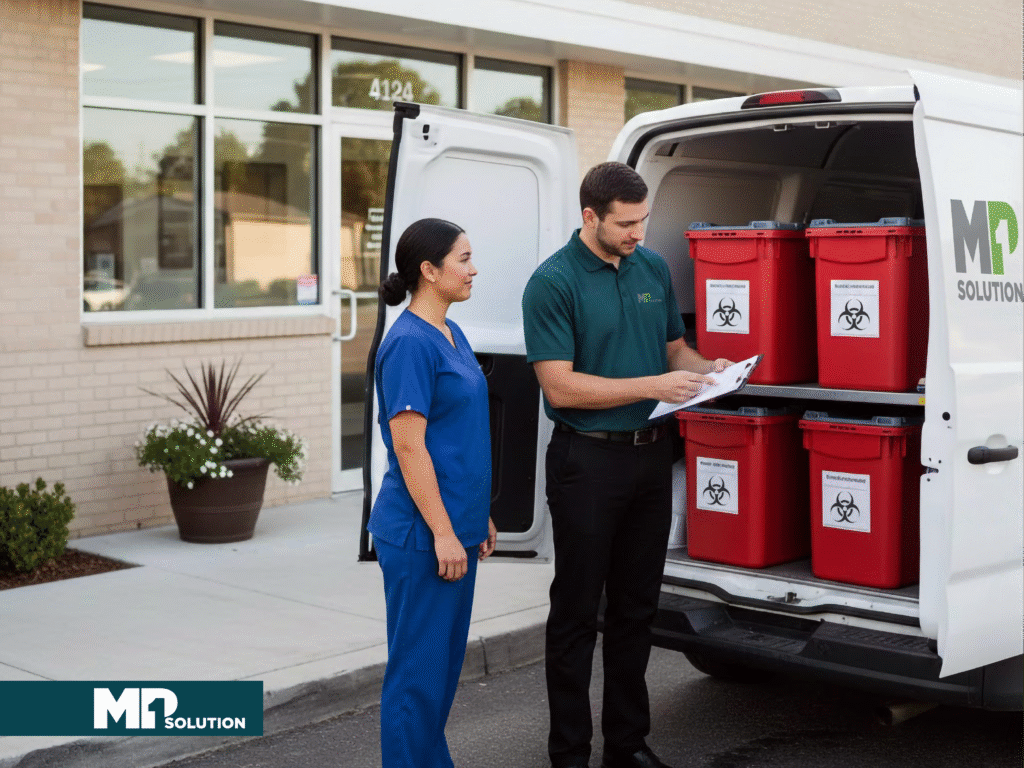
Pickup frequency should match how much medical waste your clinic generates. It should not be a one-size-fits-all pickup schedule designed for large hospitals. The key is ensuring that the medical waste pickup service frequency aligns with your waste volume. You also need to consider your storage time limits and staff safety requirements.
A reliable Naperville provider recommends the right pickup schedule for your medical waste disposal service.
- Higher-volume clinics may require a weekly pickup service to maintain safety and compliance.
- Smaller physician offices, medical spas, and specialty practices can have pickups every two weeks or once a month.
- Clinics with consistently low waste generation can use options such as mail-back programs. These are cost-effective and can help you avoid unnecessary transport fees.
Remember: Seasonal fluctuations can increase your waste volume. Also factor in flu season, vaccination campaigns, or temporary staffing increases. This way, you can prevent overflow or having to call in an emergency medical waste pickup service.
Info to Ask Your Medical Waste Disposal Service Provider
Questions to Ask a Local Medical Waste Disposal Company
Ask whether the provider holds current Illinois permits and licensing. Ask about their liability insurance coverage. Confirm their partnerships with local treatment facilities and landfills. Ask about the treatment, destruction, and final disposal methods that they use.
Regulated Medical Waste Disposal Documentation Questions
Ask about documentation that supports your regulatory compliance. A compliant RMW disposal provider will help you maintain your reports. They will provide transport manifests, training certifications, and certificates of destruction. Vendors like MP1 Solution provide clients with digital dashboards with access to documentation.
Healthcare Waste Management Contract Red Flags
Avoid vendors that offer service contracts with automatic renewals. Some providers will add minimum service fees, aggressive escalation clauses, and fuel surcharges. These agreement terms increase your costs, especially if you commit to a long-term contract.
Factors that Affect Medical Waste Disposal Service Pricing
Several operational factors drive medical waste disposal pricing in Naperville. These include:
- Waste Volume and Pickup Frequency
Many clinics in Naperville are drawn to the flat-fee pricing model for waste disposal. However, a significant drawback is that you may pay for a box with a 50-pound capacity while only using it for 10 pounds of waste. Essentially, this means you’re paying five times what you should for your actual waste volume. Instead, right-sizing your waste needs and opting for a weight-based pricing model is a better choice, especially for small clinics.
Regulatory requirements determine how often teams must schedule pickups. This can significantly impact the monthly base rate, too. Plan for ways to reduce your pickup frequency to lower your costs.
- Handling, Treatment, and Disposal
There are very few medical waste incinerators in the Midwest. As a result, Naperville clinics may pay a “transport premium,” especially for pathological waste as it must be transported to facilities that are farther away.
Local providers (as well as national ones with local presence), like MP1 Solution, can offer “stop-density” discounts. Meaning, if a provider already serves several other clinics near you, they share your “trip fee” along the route.
- The 2026 IEPA PIMW Transport Fee Increase
Effective July 1, 2026, the IEPA will increase the PIMW transport fees by 66%, raising the cost from $0.03 to $0.05 per pound. They have updated the regulatory requirements: haulers must now use federal hazardous materials shipping papers instead of state-specific IEPA manifests.
Knowing these cost drivers will give you a better understanding of your waste disposal services contract. Naperville medical waste disposal providers like MP1 Solution avoid offering oversized service plans designed for high-volume facilities. They focus, instead, on predictable pricing, appropriately sized containers, and straightforward agreements that offer flexible solutions.
A reliable Naperville provider will help you budget accurately to avoid overpaying and maintain your compliance without unnecessary financial strain.
MP1 Solution: The Medical Waste Disposal Service Naperville Clinics Trust
MP1 Solution delivers a compliant medical waste disposal service Naperville clinics can rely on. We support small clinics with flexible pickups and bundled services. We tailor our service plans to your clinic’s waste volume and size, adjusting as your needs change.
MP1 provides dedicated customer support, compliance training, and support for documentation management. We will take full responsibility to your medical waste, from pickup to destruction. We assist in ensuring compliance with OSHA, EPA, and IDPH regulations.
With MP1, you gain peace of mind, not an administrative burden.
Is your current medical waste disposal plan the right fit? Call MP1 Solution now for your needs assessment and a free no-obligation quote: 888-641-6131.